Welcome to the Test Post
This page is a deliberately overloaded sandbox for the blog. It mixes regular Markdown with custom MDX components, inline JSX, tables, figures, footnotes, downloadable citations, and interactive elements. It also includes a few ordinary hyperlinks such as Astro [astro-docs] , MDN Web Docs [mdn-docs] , and KaTeX [katex-docs] .
MDX is useful when plain prose is not enough and you want article content to behave more like a tiny application.
Markdown Basics
Regular Markdown still works exactly as expected:
- unordered lists
- bold text
- italic text
- inline
code - external links
- internal links
Task lists are handy for notes and checklists:
- Write with Markdown
- Enhance with MDX
- Add media, citations, and tables
- Resist adding too many demos
Code fences also work nicely:
function greet(name) {
  console.log(`Hello, ${name}!`);
}

greet('MDX');
Math Rendering with KaTeX
Inline math works inside regular sentences. Einstein’s famous relation is
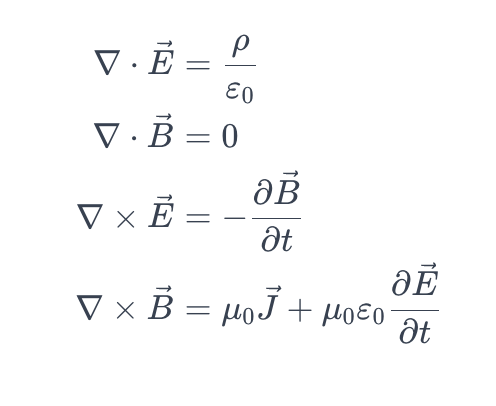
For display math, we can give an equation more room:
And aligned systems are supported too:
Admonitions
Compact note blocks are useful for side information.
Mixing prose with a few components usually reads better than turning the whole article into JSX.
Dense demo pages are great for testing, but not always great as real articles.
Interactive widgets should still degrade gracefully when JavaScript is unavailable.
This is a full-width admonition with room for a longer explanation. It works well for contextual notes, caveats, or short teaching moments embedded inside a post.
Buttons and Calls to Action
Images and Figures
The post now includes the Figure component, which is better suited for article images than a bare <img> tag because it gives us consistent captions and spacing.

Tables
Tables are useful for structured comparisons, and this component also supports CSV download plus linked HTML cells.
| Feature | Type | Status | Example |
|---|---|---|---|
| Math | Component | Used | KaTeX |
| Image Figure | Component | Used | Local post assets |
| Hyperlinks | Markdown | Used | MDN |
| References | Component | Used | Jump to references |
| Footnotes | Component | Used | Jump to footnotes |
Animations
This card fades into view.
This one slides upward with a short delay.
This element keeps bouncing.
Interactive Components
MDX lets us drop interactive JSX-driven pieces right into the article body.
Counter Demo
2Code Blocks with Tabs
The CodeBlockWithTabs component is useful when one idea needs multiple representations.
## Example Heading\n\nA paragraph with **bold text** and a [link](https://astro.build).import Admonition from "@components/Admonition.astro";\n\n<Admonition type="tip">MDX can render components inline.</Admonition><table>\n <tr><th>Feature</th><th>Enabled</th></tr>\n <tr><td>Math</td><td>true</td></tr>\n</table>Custom JSX Inside MDX
Custom JSX logic can be useful for small presentational helpers. For example, this sentence contains a green highlight and a blue highlight.
Today’s date is: Thu Oct 15 2026
Footnotes
Footnotes are now demonstrated in this post as well. They are handy for adding side remarks without breaking the main flow^authoring-note or for tucking away implementation details^table-note .
Citation Export
Besides inline references, the repo also includes a richer CitationField component that renders multiple export formats with tabbed code blocks.
Citation
You can cite this post as:
@misc{lzicar2000testpost,
  title = {Test Blog Post: Exploring Features},
  author = {Lzicar, M.},
  journal = {mireklzicar.com},
  year = {2000},
  month = {February},
  url = {https://mireklzicar.com/blog/test/}
  note = {Demonstration entry for the MDX sandbox post},
}
TY - JOUR
TI - Test Blog Post: Exploring Features
AU - Lzicar, M.
JO - mireklzicar.com
PY - 2000
DA - 2000/10/20
UR - https://mireklzicar.com/blog/test/
ER - Lzicar, M. (2000, February 20). Test Blog Post: Exploring Features. *mireklzicar.com*. https://mireklzicar.com/blog/test/Lzicar, M.. "Test Blog Post: Exploring Features." *mireklzicar.com*, 20 February 2000, https://mireklzicar.com/blog/test/. Accessed October 15, 2026.Lzicar, M.. "Test Blog Post: Exploring Features." mireklzicar.com. February 20, 2000. https://mireklzicar.com/blog/test/.Lzicar, M.. Test Blog Post: Exploring Features. mireklzicar.com [Internet]. 2000 February 20 [cited 2026-10-15]; Available from: https://mireklzicar.com/blog/test/Lzicar, M., "Test Blog Post: Exploring Features," mireklzicar.com, February 20, 2000. [Online]. Available: https://mireklzicar.com/blog/test/References
Inline citations work like this [astro-docs] and this [katex-docs] . They can point to official docs, papers, or any other sources you want to collect in one place.
References
Footnotes Section
The table component can also export its rows to CSV, which makes it handy for small datasets in technical posts.
Conclusion
This file now acts as a fuller content playground for the site. It covers Markdown, MDX, figures, tables, hyperlinks, citations, footnotes, code tabs, math, animation, and interactive components in one place, which should make future content testing much easier.